

Plants struggling with too much sunlight or heat can become unhealthy or die. Choosing the correct shade percentage can save plants and improve overall crop health significantly.
A 40% shade net is a mesh fabric that blocks 40% of sunlight, allowing 60% to reach plants. It gives moderate shade, reduces heat stress, and protects plants from harmful sunlight, improving growth and crop yield.

Understanding how to choose, install, and maintain a 40% shade net helps growers protect their investment and get the best performance from their crops. This guide breaks it all down step by step.
What is 40% shade net?
Excessive sunlight can severely damage delicate plants, leading to reduced growth, poor crop yields, and wasted resources.
A 40% shade net is a woven or knitted fabric designed to block precisely 40% of sunlight. It allows 60% of the available sunlight to pass through, providing moderate shade and protection from excessive heat, ultraviolet radiation, and sunburn for crops, nurseries, or greenhouse plants.

How is 40% shade net made?
Shade nets, including those with 40% shading, are primarily made from High-Density Polyethylene (HDPE), treated to resist ultraviolet rays. The nets are knitted or woven in a specific pattern, creating consistent shade coverage. Knitted shade nets are stronger and resist tearing better, while woven shade nets are more lightweight and often used in temporary applications.
What does 40% shade percentage mean?
Farmers and greenhouse owners often struggle to understand exactly what shade percentages mean, resulting in confusion when choosing shade nets.
The term "40% shade" means that the net blocks 40% of direct sunlight, allowing the remaining 60% to reach the plants. This moderate level of shading helps reduce temperature and sunlight intensity while still providing sufficient sunlight for photosynthesis and optimal growth.

Comparing Different Shade Percentages
Growers often wonder how 40% shade compares to other shade percentages. Here is a simple comparison table:
| Shade Percentage | Sunlight Blocked | Suitable Crops/Plants |
|---|---|---|
| 30% | 30% | Sun-loving plants, general crops |
| 40% | 40% | Moderate protection, most plants |
| 50% | 50% | Sensitive crops, high heat areas |
| 70% | 70% | Ferns, orchids, shade-loving plants |
This data indicates that a 40% shade net provides moderate protection, suitable for a broad range of agricultural and horticultural applications, without overly restricting light.
Factors Influencing Shade Effectiveness
The effectiveness of the shade percentage is influenced by several factors, including:
- Sunlight intensity (location-specific)
- Net color (black, white, green)
- Installation angle and positioning
- Material density and weave pattern
Understanding these factors helps growers achieve the most beneficial shading conditions for their specific needs.
Is 40% shade net good for plants?
Incorrect shade cloth selection can harm plant growth. Growers need clear guidance on whether 40% shade cloth is suitable for their plants or not.
Yes, 40% shade cloth is good for most plants requiring moderate sunlight protection. It reduces heat stress and sun damage while providing enough sunlight for photosynthesis, making it ideal for vegetables, young seedlings, nurseries, flowers, and greenhouse plants grown in moderate climates.

Benefits of Using 40% Shade Cloth for Plants
Research shows several benefits of using 40% shade cloth:
- Reduces temperature and UV exposure, lowering heat stress.
- Prevents leaf scorch, sunburn, and dehydration.
- Enhances growth rate and plant vigor.
- Improves overall crop yield and quality.
Which Plants Benefit Most from 40% Shade Cloth?
Different plants respond differently to shade. The table below highlights common plants that thrive under 40% shading:
| Plant Category | Examples | Reason for Suitability |
|---|---|---|
| Vegetable crops | Tomatoes, cucumbers | Balances sunlight and heat protection |
| Flowering plants | Roses, daisies | Improves flower color and plant vitality |
| Young seedlings and saplings | Fruit tree seedlings, herbs | Prevents sunburn, supports strong early growth |
Research indicates that tomatoes under 40% shade nets produce healthier foliage and better fruit quality compared to those grown under direct sunlight in hotter climates.
What are the uses for 40% shade net?
Strong sunlight often damages young plants or sensitive crops, reducing yields and profits. Choosing the right shade net solves these issues.
A 40% shade net is used mainly for nurseries, greenhouses, vegetable farms, flower gardens, and fruit orchards. It reduces intense sunlight, protects young plants, and improves growing conditions without overly restricting sunlight needed for healthy growth.

Common Applications for 40% Shade Net
A 40% shade net is versatile. It benefits several agricultural and horticultural uses, summarized in the table below:
| Application Area | Why Choose 40% Shade Net? |
|---|---|
| Greenhouses | Balances temperature and sunlight for better growth |
| Vegetable farming | Protects crops like tomatoes, cucumbers, peppers |
| Flower cultivation | Improves color, growth rate, and reduces heat stress |
| Fruit orchards | Protects young fruit trees from sunburn |
| Seedling nurseries | Prevents dehydration, improves survival rate |
Growers using 40% shade nets typically find better plant health, reduced water usage, and higher overall yields. Studies show that plants under moderate shading produce healthier leaves and improved fruit quality compared to those exposed to direct sunlight continuously.
How to Select a 40% Shade Net for Specific Uses
Selecting the correct shade net involves careful consideration:
- Color: Black absorbs heat, green blends well, and white reflects more heat.
- Material: HDPE shade nets offer durability and UV resistance.
- Installation method: Proper support structures ensure optimal shading and longevity.
What is the advantage and disadvantage of 40% shade net?
Many growers struggle with the decision of what shade percentage is ideal. Understanding both advantages and disadvantages helps in making better choices.
The advantage of a 40% shade net includes moderate shading, reducing plant stress, protection from UV rays, improved growth rates, and better yields. The disadvantage is reduced sunlight availability for sun-loving crops, and limited suitability for extremely hot climates requiring higher shading.

Advantages of 40% Shade Net
- Moderate Sun Protection: Ideal for crops needing balanced sunlight exposure.
- Temperature Control: Reduces heat, helping plants grow in hot seasons.
- Improved Plant Health: Reduces sunburn, dehydration, and stress.
Disadvantages of 40% Shade Net
- Limited Sunlight for Sun-Loving Plants: Crops needing maximum sunlight, like certain grains or root vegetables, may grow slower under 40% shade.
- Not Enough Protection in Extreme Heat: Areas with extreme heat might require higher shading (50%-70%) for adequate plant protection.
| Pros | Cons |
|---|---|
| Balanced sunlight control | Insufficient for plants needing high sun |
| Lower plant stress and sunburn | Limited effectiveness in very hot climates |
| Better water use efficiency | May slightly reduce yield for some crops |
Growers must understand their crops and local conditions before choosing a 40% shade net.
How much will 40% shade net reduce temperature?
High temperatures harm plant growth and crop yields. Growers need clear data to understand how much temperature reduction to expect from a 40% shade net.
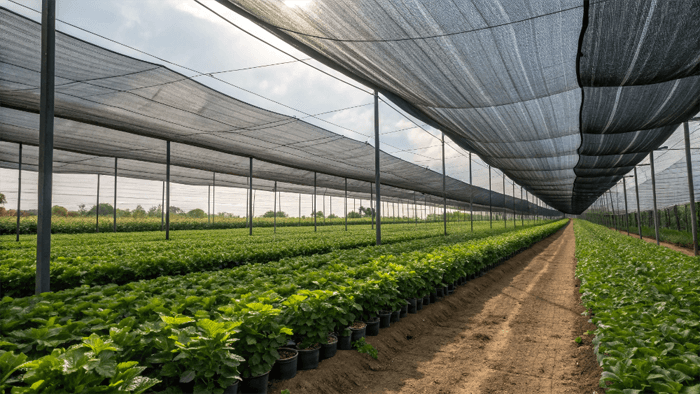
Research shows a 40% shade cloth typically reduces ambient temperature beneath it by about 5 to 10 degrees Celsius (9 to 18 degrees Fahrenheit), depending on local climate conditions, net color, and installation practices.
Factors Affecting Temperature Reduction
Several factors influence how effective a 40% shade net is in reducing temperature:
- Net Color:
- Black shade nets absorb heat but effectively block sunlight.
- White shade nets reflect sunlight and heat more effectively, offering better cooling.
- Local Climate:
In hotter regions, growers may observe a larger temperature reduction. Cooler areas will see smaller differences. - Installation Height and Airflow:
Higher installations with good airflow help increase cooling efficiency.
Typical Temperature Reduction (Table)
The table below shows typical temperature reductions based on different net colors and installation methods:
| Shade Net Color | Temperature Reduction (°C) | Temperature Reduction (°F) |
|---|---|---|
| Black | 4 - 7°C | 7 - 13°F |
| Green | 5 - 8°C | 9 - 14°F |
| White | 6 - 10°C | 11 - 18°F |
Growers who carefully choose net color and proper installation methods can achieve better cooling results. This helps crops handle hot weather, improving overall plant health and productivity.
How to install 40% shade net?
Improper installation can cause damage to both crops and the net. Wind, sagging, and tearing are common issues when installation is rushed.
Install a 40% shade net by measuring the space, building a solid frame, securing the net tightly using clips or ropes, and checking that the net is stretched evenly to avoid sagging.

Step-by-Step Installation Guide
Shade net installation must follow basic structural and tension principles to remain effective.
Step 1: Measure Your Space
Before ordering the net, measure the area where you plan to install. Add 5–10% extra to account for overlap and anchoring.
Step 2: Build a Support Frame
Use metal or treated wooden poles. The height depends on plant height and whether you want to walk under the net. Use crossbars or wires for support.
Step 3: Attach the Shade Net
Use shade net clips, UV-resistant ropes, or wires. Start from one corner and move across diagonally, stretching the net to maintain even tension.
Step 4: Anchor and Inspect
Secure the net to the frame base. Avoid letting it flap in the wind. Check for sagging and adjust where needed.
| Installation Tip | Purpose |
|---|---|
| Use clips at intervals | Prevent tearing and flapping |
| Stretch net tightly | Avoid pooling rainwater |
| Anchor on all sides | Add wind resistance |
| Avoid sharp edges | Prevent cuts and fraying |
How to maintain and clean 40% shade net?
Over time, shade nets can collect dust, lose tension, or get damaged. Poor maintenance shortens lifespan and reduces effectiveness.
To maintain and clean a 40% shade net, wash it with low-pressure water every few months, repair any tears immediately, and store it dry and rolled when not in use to prevent mold or wear.

Cleaning and Maintenance Checklist
Regular maintenance helps extend the lifespan of your shade net and ensures consistent protection.
| Maintenance Task | Frequency | Why It's Important |
|---|---|---|
| Inspect for damage | Monthly | Fix holes before they expand |
| Wash with water | Every 2-3 months | Remove dust, leaves, and pollutants |
| Tighten attachments | Seasonal | Prevent sagging or tearing |
| Store properly | Off-season | Avoid UV exposure, mold, and insects |
Use a soft brush or cloth for gentle cleaning. Do not use chemicals that may degrade the UV treatment of the fabric. When storing the net, make sure it’s fully dry. Fold or roll it loosely and keep it in a shaded, dry space away from pests and sunlight.
Conclusion
Choosing the right shade percentage for crops is crucial to achieving optimal growth conditions and yield. A 40% shade net provides balanced shading suitable for most horticultural and agricultural applications. Growers should carefully consider their plant species, climate conditions, and specific needs when choosing shade cloth.
If you're facing specific challenges or need help determining the ideal shade percentage and net specifications for your unique growing environment, QiBang Netting's team of experts can provide customized solutions tailored to your needs.
Frequently Asked Questions (FAQs) for 40% Shade Net
1. Are there any specific plants that benefit most from 40% shade cloth?
Yes, crops like lettuce, basil, peppers, begonias, and nursery seedlings thrive under 40% shade cloth, which provides enough protection from heat without compromising essential light for growth.
2. Can 40% shade net be used in greenhouses?
Yes, 40% shade net is ideal for greenhouses in warm climates. It reduces heat buildup and UV exposure while ensuring enough light passes through for plant growth.
3. Is 40% shade net suitable for flower farms?
Yes, flower farms use 40% shade net to protect delicate blooms from sunburn, enhance color quality, and reduce heat stress, especially in warmer climates.
4. How long does a 40% shade net typically last?
A high-quality 40% shade net made from UV-stabilized HDPE can last 5 to 8 years with proper installation and maintenance, including regular cleaning and protection from sharp edges.
5. Can 40% shade net reduce water usage?
Yes, by lowering soil temperature and reducing evaporation, 40% shade net helps retain moisture, allowing growers to reduce irrigation frequency and improve water efficiency.
